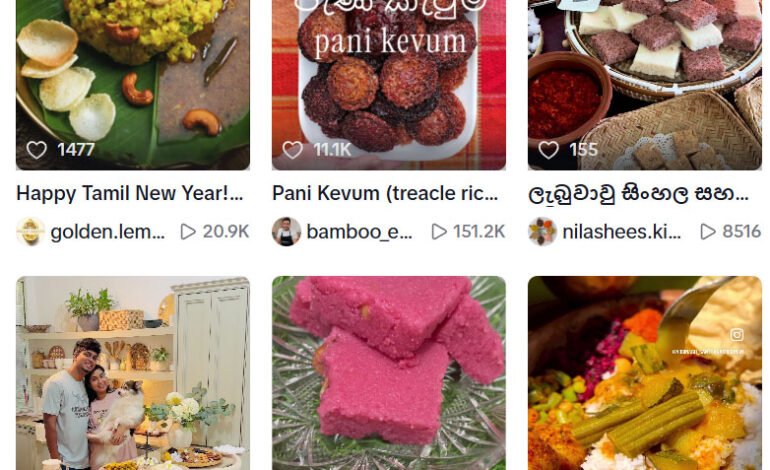

There is a certain kind of magic that arrives in Sri Lanka with April. We hear it before we see it, in the unmistakable call of the koha bird echoing through the morning, signaling that Avurudu is near. Then comes the rush. Homes across the island, Sinhala and Tamil alike, slip into a familiar rhythm of preparation. Kitchens stay busy late into the night, with batches of kevum, kokis, pani walalu, aasmi and rava laddu made in careful succession. Lists are checked and rechecked, new clothes are folded and set aside, and parcels are put together for relatives and neighbours in the spirit of gifting and goodwill.
These moments have always defined Avurudu. The lighting of the hearth, the sharing of kiribath at the right time, the quiet exchange of blessings. Tradition, lived and repeated.
Today, that same magic is no longer confined to the home. It is unfolding across screens, borders and communities, as traditions are shared and rediscovered in real time on TikTok. From #Avurudu, #TamizhPuththandu, #AluthAvurudda, #SinhalaTamilNewYear, etc., what was once experienced within a single household now becomes part of a collective, digital celebration. Beyond organising content, these moments, hashtags, and content create a shared cultural moment, allowing users to move seamlessly between inspiration, preparation and participation.
The Avurudu table, once rooted in a single home, is now something much larger. It is shared, expanded and constantly evolving, connecting people through culture in ways that feel immediate, visible and collective.
Time, Ritual and Relevance: Nakath or Subha Neram in the Digital Age
Avurudu is one of the few cultural celebrations where time itself is sacred. Every act, from lighting the hearth to beginning work, is guided by nakath (Sinhala) or Subha Neram (Tamil), the auspicious timings that structure the festival. Traditionally, these were followed through almanacs or passed down by elders, often understood through repetition rather than explanation.
Today, that understanding is becoming more immediate and participatory on TikTok. Creators are translating nakath and Subha Neram into short-form, utility-driven content. Timings are broken down through countdowns, text overlays and step-by-step explainers, while others use POV-style videos, reminders and voiceovers to guide users through each ritual in real time. Tamil creators are similarly surfacing Subha Neram through contextual, easy-to-follow formats, ensuring parallel traditions are equally visible.
Discovery is equally intuitive. Through search-led behaviour, personalised feeds and trending content patterns, users are surfaced with relevant videos at the exact moments they need them, whether it’s when to light the hearth or when to begin work.
The Avurudu Kitchen as Content: From Preservation to Participation
If Avurudu is rooted in ritual, it is ultimately realized through food. The Avurudu table is not simply a spread of sweets and dishes. It is a cultural expression of abundance, generosity and continuity. Every item, from kevum and kokis to pani walalu, aasmi and kiribath, carries love. It reflects effort, care and the intention to share, not just within the home, but with extended family, neighbours and the community at large.
For generations, this process has been deeply internal. Recipes were rarely written down or standardized. They were observed, repeated and perfected over time, often guided by elders within the household. The kitchen, in this sense, functioned as both a learning space and a cultural archive, where tradition was passed on quietly, through participation rather than instruction.
What TikTok has changed is how this knowledge is accessed and retained. Today, the preparation of the Avurudu table is shared in real time, with creators documenting not just outcomes, but process. Recipes are broken down into clear, repeatable steps through captions, on-screen text and voiceovers, making them easier to follow and recreate.
Crucially, this content does not disappear in the moment. Through save (bookmark) features, collections, and search, users can return to recipes when needed, whether it’s during preparation or in the lead-up to Avurudu. In some cases, TikTok also structures cooking content into guided recipe formats, making it easier to navigate ingredients and steps within a single video experience.
This shift matters at a time when fewer young people are directly involved in these preparations at home. TikTok becomes a practical extension of the kitchen, enabling users to learn, revisit and participate in ways that feel immediate and manageable.
Ganu Denu or Kai Vishesham Reimagined: How Brands Are Designing for Avurudu on TikTok
Avurudu has always been deeply tied to exchange. The concept of ganu denu or Kai Vishesham reflects not only the giving of gifts, but the circulation of goodwill, prosperity and connection within communities. Today, TikTok is increasingly acting as the bridge that connects this tradition to modern behaviour, linking brands, their offerings and audiences in a single, dynamic space.
What was once found through markets or word of mouth is now surfaced through real, lived content. Users move from watching families prepare Avurudu tables to discovering products, ideas and brands within the same experience, making the journey from inspiration to action more immediate.
For brands, this shifts TikTok from a visibility platform to a decision-shaping environment. Through tools like the TikTok Creative Center, brands and creators can identify seasonal trends, high-performing content patterns and emerging audience interests, allowing them to design content that aligns with how people are actually celebrating. This is where creators play a critical role. Instead of traditional advertising, brands collaborate with creators to embed products into real Avurudu moments, assembling kavili trays, curating gift packs or showcasing festive looks. The content feels native, contextual and credible.
At the same time, TikTok’s interactive features, from comments and shares to remixes, turn this into a two-way exchange, where audiences don’t just view content, but respond, adapt and participate.
The Table That Keeps Expanding
For generations, Avurudu has been carried forward through doing. It lived within homes, shaped by those who showed up, took part and passed it on.
On TikTok, that same tradition now moves differently. It is seen across homes, across regions, across communities, all at once. Preparation, rituals and celebration no longer unfold in isolation, but as part of a shared, visible experience that people can follow, learn from and step into.
What this creates is not a new version of Avurudu, but a more connected one. One where tradition is reinforced through many hands, many homes and many interpretations, all contributing to the same cultural moment.
The Avurudu table no longer belongs to a single household. It belongs to everyone who builds it, shares it and carries it forward. And that is how it continues to grow.